Quanto è realistico oggi il pericolo di una deriva autoritaria in Europa? Che ruolo possono giocare terrorismo e populismo?
Sullo sfondo delle vite dei protagonisti si sviluppano eventi scottanti e di estrema attualità: i deficit di democrazia e trasparenza nelle istituzioni europee, le asimmetrie economiche, l'allargamento della forbice tra povertà e ricchezza, l'ascesa del populismo e il ruolo del terrorismo.
Un thriller distopico che si impone nell'odierno dibattito politico e sociale.
"In Europa ci sono già i presupposti per l'esplosione di un conflitto sociale. Questo è il seme del malcontento, dell'egoismo e della disperazione che la classe politica e la classe dirigente hanno sparso. Questo è terreno fertile per la xenofobia, la violenza, il terrorismo interno, il successo del populismo e dell'estremismo politico."
Una decina di Paesi, tra cui Ungheria e Arabia Saudita, hanno usato il software di spionaggio dell'israeliana NSO per tenere sotto controllo il dissenso
Più di mille persone – tra cui quasi 190 giornalisti, oltre 600 politici e funzionari governativi, almeno 65 dirigenti aziendali, 85 attivisti per i diritti umani e diversi capi di Stato e di governo - sono finite nel mirino di governi autoritari che sono ricorsi al software di spionaggio Pegasus dell’azienda israeliana NSO Group. A rivelare il maxi sistema di spionaggio è un’indagine condotta da 17 testate internazionali - tra cui il Washington Post e il Guardian - sulla base di dati ottenuti dall’organizzazione no profit di giornalismo Forbidden Stories con base a Parigi e dal gruppo per i diritti umani Amnesty International. Secondo il Security Tech Lab della ong, guidato dall’italiano Claudio Guarnieri, il malware era stato installato sul telefono di Hatice Cengiz, la fidanzata di Khashoggi, quattro giorni prima del suo assassinio. Lo spyware dell’azienda israeliana NSO Group - denuncia l’organizzazione - ”è usato per facilitare violazioni dei diritti umani a livello globale e su scala massiccia”.
NSO Group è l’organizzazione di hacker su commissione più famigerata al mondo, e Pegasus è lo spyware di punta del gruppo. Il software di livello militare, nato per per consentire ai governi di penetrare le reti di terroristi e criminali, è un malware che infetta gli iPhone e gli smartphone Android per consentire a chi lo opera di accedere ai dispositivi ed estrarre messaggi, foto, email e anche per attivare segretamente il microfono e la telecamera del dispositivo. NSO Group nega che i dati siano trapelati dai suoi server e definisce il rapporto di Forbidden Stories “pieno di ipotesi errate e teorie non confermate”.
Sono almeno dieci i Paesi implicati nell’affaire Pegasus come clienti di NSO: si tratta di Ungheria, Azerbaigian, Kazakhstan, Arabia Saudita, Emirati Arabi Uniti, Bahrein, India, Messico, Marocco, Ruanda. Come tengono a evidenziare le testate internazionali, la sola presenza del numero di telefono nel database di Pegasus - composto da oltre 50.000 contatti - non significa necessariamente che quella persona sia stata spiata, tuttavia il dato è rivelatore del fatto che ci sono governi pronti a tenere sotto controllo la vita professionale e privata di persone che con la criminalità o il terrorismo internazionale non hanno nulla a che fare.
La tecnologia – riporta il Guardian - sarebbe stata usata anche dal governo ungherese di Viktor Orbán nell’ambito della sua guerra ai media. Proprio lo staff di Orban, con il Washington Post, replica secco: “In Ungheria gli organi statali autorizzati all’uso di strumenti sotto copertura sono monitorati regolarmente dalle istituzioni governative e non governative. Avete fatto la stessa domanda ai governi degli Stati Uniti, del Regno Unito, della Germania o della Francia?”.
A Pegasus avrebbero fatto ricorso anche l’Arabia Saudita e gli Emirati Arabi Uniti per prendere di mira i cellulari di alcune persone vicine al giornalista ucciso Jamal Khashoggi. Secondo le verifiche di Amnesty, lo spyware è stato installato con successo sul telefono della fidanzata di Khashoggi, Hatice Cengiz, appena quattro giorni dopo l’omicidio avvenuto nel 2018 nel consolato saudita a Istanbul. La società NSO era stata precedentemente implicata in altre attività di spionaggio sul caso Khashoggi.
Da un elenco di oltre 50.000 numeri di cellulare ottenuto da Forbidden Stories e Amnesty International, il Pegasus Project ha identificato più di 1.000 persone in 50 Paesi che sarebbero state selezionate da clienti di NSO per una potenziale sorveglianza. A essere finiti nell’occhio di Pegasus sono, tra gli altri, la direttrice del Financial Times Roula Khalaf e giornalisti di Associated Press, Reuters, CNN, Wall Street Journal, New York Times, Bloomberg News, Le Monde.
L’analisi dell’elenco mette in evidenza che il cliente di NSO che ha selezionato la maggior quantità di numeri di telefono è il Messico con oltre 15.000. Il Marocco e gli Emirati Arabi Uniti ne hanno selezionati più di 10.000. I numeri selezionati sono stati rintracciati in oltre 45 Paesi in quattro continenti. In Europa sono oltre 10.000 i contatti telefonici inseriti dai clienti di NSO.
L’inchiesta riapre il dibattito sull’uso diffuso di strumenti di spionaggio che minacciano le democrazie, affermano i critici, osservando come la sorveglianza renda difficile per i giornalisti raccogliere informazioni, per gli attivisti continuare a svolgere la loro attività e per gli oppositori politici pianificare le loro strategie. Con Pegasus, mette in evidenza l’ex dell’intelligence americana Timothy Summers, si può spiare quasi l’intera popolazione mondiale: “Non c’è nulla di male nello sviluppare tecnologie che consentono di raccogliere dati. Ma l’umanità non è in una situazione di poter rendere accessibile a tutti tanto potere”.
Per Agnes Callamard, segretaria generale di Amnesty International, “il numero di giornalisti identificati come obiettivi illustra chiaramente come Pegasus venga utilizzato come strumento per intimidire i media critici. Si tratta di controllare la narrativa pubblica, resistere al controllo e sopprimere qualsiasi voce di dissenso″. In un caso evidenziato dal Guardian, il giornalista messicano Cecilio Pineda Birto è stato assassinato nel 2017 poche settimane dopo che il suo numero di cellulare era apparso sulla lista trapelata. Tra gli spiati figura Umar Khalid, leader indiano della Democratic Students’ Union in carcere dallo scorso anno. Nel corso del processo, l’accusa ha presentato documenti che erano nel telefono personale dell’imputato senza spiegare in che modo vi fosse entrata in possesso. È stato spiato per ben tre anni il telefono di Khadija Ismayilova, una delle più importanti reporter dell’Azerbaigian per le sue inchieste atte a rivelare corruzioni e abusi del presidente Ilham Aliyev. Il governo di Baku è accusato di aver messo sotto controllo almeno 48 cronisti.
L’inchiesta ha rilanciato le pressioni internazionali sul governo israeliano, che di fatto consente all’azienda di fare affari con regimi autoritari che utilizzano lo spyware per scopi che vanno ben oltre l’obiettivo dichiarato, che è quello di prendere di mira terroristi e criminali. Le rivelazioni seguono un recente rapporto del New York Times, secondo cui Israele ha permesso alla NSO di fare affari con l’Arabia Saudita e l’ha incoraggiata a continuare a farlo anche dopo l’omicidio del giornalista e dissidente Khashoggi.
Per fornire i propri servizi in un dato Paese, l’azienda deve ricevere un permesso dal governo israeliano, ma una volta consegnati i software ai governi che ne fanno richiesta NSO ha un limitato controllo su scopi e modalità di utilizzo.
Le nuove accuse hanno accresciuto le preoccupazioni tra gli attivisti per la privacy secondo cui nessun utente di smartphone, nemmeno quelli che utilizzano software come WhatsApp o Signal, è al sicuro dai governi e da chiunque altro disponga della giusta tecnologia di sorveglianza informatica.
“Smetti di fare quello che stai facendo e leggi questo”, ha twittato Edward Snowden, l’informatore che ha fatto trapelare un gran numero di informazioni riservate dalla National Security Agency nel 2013. “Questa fuga di notizie sarà la storia dell’anno”.
AsiaNews – Una azienda israeliana ha aiutato diversi governi nel mondo, anche arabi, a spiare e hackerare i movimenti di attivisti, giornalisti, dipendenti delle ambasciate, diplomatici e politici dell’opposizione. Secondo quanto emerge da un rapporto elaborato da Microsoft, lo spyware era installato attraverso gruppi web umanitari fasulli, incluse pagine contraffatte di Amnesty International e Black Lives Matter.
La scoperta emerge da uno studio degli esperti di Citizen Lab dell’università di Toronto, che hanno lavorato assieme alla Microsoft per portare alla luce le attività “maligne” di Candiru, una azienda con base a Tel Aviv, specializzata nella vendita di spyware “non rintracciabili”. Secondo il rapporto, la tecnologia ha consentito di entrare in Microsoft Windows, infettando e monitorando le attività dei proprietari di computer e telefoni cellulari.
Scandagliando la rete, Citizen Lab avrebbe identificato più di 750 siti collegati all’infrastruttura spyware di Candiru. “Abbiamo trovato molti domini – afferma un ricercatore – mascherati da organizzazioni attiviste, oltre a società di media e altre entità legate alla società civile”.
Bill Marczak, coautore del rapporto, spiega al Guardian che spesso le fonti sembravano attendibili ma una volta penetrato lo spyware eseguiva “un codice in background“ per “dirottare in modo silenzioso” il “controllo dei computer” delle persone colpite.
Il codice, aggiunge l’esperto, garantiva un “accesso costante” al computer o allo smartphone, consentendo ai governi di rubare password, documenti, di accendere microfoni o videocamere delle persone spiate.
Microsoft parla di almeno 100 vittime nei Territori occupati palestinesi, Israele, Iran, Libano, Yemen, Turchia, Armenia e Singapore.
“La crescente presenza di Candiru e l’uso della sua tecnologia di sorveglianza sulla società civile globale è un promemoria – afferma Citizen Lab – del fatto che l’industria dello spyware mercenario è formata da molti attori e soggetta ad abusi diffusi”. In due anni dalla fondazione, Candiru avrebbe fatturato quasi 30 milioni di dollari. I suoi clienti si trovano in Europa, ex Unione Sovietica, Golfo Persico, Asia e America Latina.
Fra le nazioni che vi fanno ricorso vi sarebbero diverse realtà mediorientali fra cui Arabia Saudita, Emirati Arabi Uniti (Eau) e Qatar.
Diverse aziende israeliane, i cui fondatori provengono da Intelligence e Difesa, hanno sviluppato tecnologie per hackerare e spiare telefoni cellulari o computer. A giugno Quadream, altra società con sede a Tel Aviv, è stata accusata di aver venduto un programma chiamato Reign alle autorità saudite, capace di rubare dati dai telefoni e usarli come dispostivi di localizzazione, senza utilizzare link civetta per entrare nei dispositivi.
Anche lo spyware Pegasus, sviluppato dalla più grande società di sorveglianza israeliana NSO Group, utilizza la tecnologia zero-click ed è stato venduto, tra gli altri, all’Arabia Saudita.
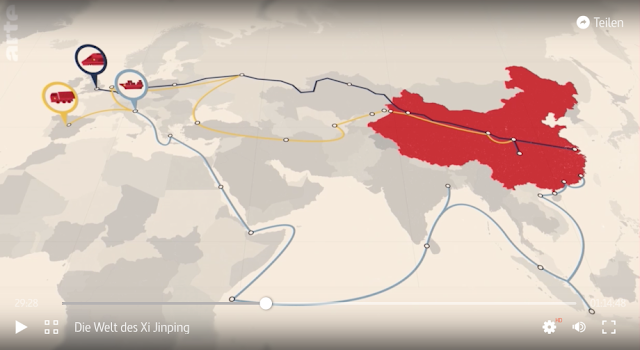
Behind his polite exterior lies a formidable leader with a ruthless character, ready to do anything to make #China the world's leading power by the People’s Republic’s centenary in 2049.
This well-documented portrait of the Chinese president gives an unprecedented insight into his politics and shows how Xi #Jinping's personal journey has shaped his choices as he steers China towards world domination.
Strasburgo approva la sorveglianza di massa di tutte le email
Privacy. Con la scusa della pedofilia, l'Ue straccia le sue norme a tutela della privacy e consente per tre anni il controllo di massa di tutti i messaggi, i commenti e le email. Un'intelligenza artificiale controllerà tutto e in casi sospetti girerà la segnalazione agli organi di vigilanza. Critiche tutte le ong e gli specialisti di lotta alla pedofilia.
Il Manifesto, Stefano Bocconetti EDIZIONE DEL 09.07.2021, PUBBLICATO 8.7.2021, 11:05
Una deroga ai principi generali. Di fatto uno “strappo” che nega quei principi generali. Regalando un’altra legge a chi sogna un controllo di massa più invasivo, ancora più invasivo.
Accade in Europa, che pure fino a ieri era considerata la parte più avanzata del mondo in materia di tutela della privacy. Invece martedì 6 luglio – con una votazione passata un po’ sotto silenzio – il parlamento di Bruxelles ha varato, a stragrande maggioranza, una controversa normativa che permetterà ai provider di setacciare ogni mail, ogni commento, ogni messaggio scritto. In deroga, appunto, all’avanzatissimo (non più?) Gdpr, il regolamento europeo per la protezione dei dati.
Il pretesto? Sempre lo stesso, sempre quello che anche al di là dell’Oceano giustifica le norme che violano la privacy: la lotta alla pedofilia.
La “deroga” – cioè la validità di questa legge – durerà tre anni. Nel senso che i 537 eurodeputati che hanno votato sì (appena 133, invece, quelli contro: la sinistra, i verdi e pochissimi obiettori fra le fila dei socialdemocratici) sanno benissimo che la norma – proprio perché in contrasto col Gdpr – quasi sicuramente non passerà l’esame di un tribunale, sanno benissimo che i ricorsi avranno molte possibilità di essere accolti. Anzi, il deputato tedesco dei pirati (nel gruppo dei verdi) Patrick Breyer, ha già lanciato una campagna in rete per presentare dieci, cento, mille esposti all’Alta Corte europea.
Quei tre anni di sospensione, la deroga temporanea delle misure a tutela della privacy dovrebbero servire, quindi, nelle intenzioni dei promotori ad evitare la bocciatura. Come se si trattasse di una misura straordinaria, eccezionale e quindi non sanzionabile.
Ma non ci credono tanto neanche loro. Al punto che Sophie in ‘t Veld, eurodeputata liberale olandese – nome che dovrebbe essere conosciuto anche in Italia, visto che dieci anni fa lei, moderata e conservatrice, divenne quasi un’icona solo perché aveva denunciato il linguaggio antifemminile di Berlusconi -; Sophie in ‘t Veld, si diceva, votando a favore ha aggiunto: “Signor Presidente, diciamoci la verità: sia io che lei sappiamo bene che le normative europee ci impedirebbero di approvare questa legge”.
Sophie in ‘t Veld e la stragrande maggioranza degli eurodeputati, invece, l’hanno fatta passare. Con una fretta che davvero non ha precedenti nelle vicende legislative del vecchio continente, noto per iter che in genere durano anni e anni.
Stavolta, invece, la Commissione ha presentato la sua proposta a settembre. Davanti al coro di no della società civile, non si sono fermati. E sono cominciate le pressioni, le forti pressioni sul Parlamento per approvarla rapidamente. Pressioni – racconta il solitamente bene informatopolitico.eu– che sarebbero arrivate addirittura dall’America, probabilmente per dare un po’ di dignità politica alle loro norme, molto simili.
Pressioni, anche qui, ammesse tranquillamente dalla relatrice, la socialdemocratica Birgit Sippel: “Sì, ne abbiamo ricevute molte. Per fare presto”. Unica concessione fatta dai promotori, l’unica modifica al testo iniziale, è che dal filtraggio saranno esentati i messaggi audio. Tutto qui.
Così in attesa di un giudice a Strasburgo, la norma entrerà in vigore. E così i provider potranno scansionare, visionare e controllare tutti i messaggi, tutte le immagini sui siti, sui social, addirittura nelle email alla ricerca di testi e foto “sospette”. Il tutto affidato all’intelligenza artificiale: se l’algoritmo “leggerà” un contenuto come pericoloso, trasmetterà la segnalazione, senza verifica umana, a un centro che poi la girerà alle polizie competenti. Senza che gli indagati siano avvisati di questa strana e improbabile inchiesta virtuale.
Magari non è molto pertinente ma forse vale la pena ricordare che le denunce alla polizia degli utenti verso altri utenti sospettati di pedofilia – denunce che probabilmente servono ad istruire le intelligenze artificiali – nel 95 per cento dei casi si sono rivelate inaffidabili.
Non è ancora tutto. Perché ci sarà anche un follow-up, un seguito alla votazione di martedì scorso.
Di fronte alle proteste di tutte le associazioni per i diritti digitali – ma proprio tutte-tutte, a cominciare dall’Edri, la istituzionalissima European Digital Rights – i promotori hanno sostenuto che fra poco un pool di esperti scriverà un documento per indicare nel dettaglio gli strumenti tecnici per realizzare questo screening di massa “in equilibrio con la tutela dei diritti”.
Ossimoro a parte, il seguito della legge dovrebbe preoccupare ancora di più. Perché stando al dibattito che l’ha accompagnata, l’Europa vorrebbe obbligare anche i social che offrono servizi di messaggi crittografati – WhatsApp e Signal per capire – ad adattarsi ai controlli.
Quindi, di fatto, introducendo una backdoor, una porticina che renderebbe violabili gli scambi “end to end”. E non esisterebbe più la crittografia.
Qualcuno, nel brevissimo dibattito, ha ricordato, ovviamente, che tutto ciò non ha nulla a che vedere con la lotta alla pedofilia. Visto che chi prova ad abusare dei minorenni non si propone certo su FaceBook o sui social tradizionali.
Magari andrebbe potenziata la capacità di infiltrarsi degli agenti nei gruppi di pedofili, magari andrebbe aumentato il numero di persone che si occupano di queste inchieste, visto che – sempre per fare il caso della Germania -, mancando personale, sono ancora da “visionare” centinaia di hard disk sequestrati agli arrestati.
Forse andrebbe accresciuto il coordinamento fra gli investigatori. Di più, come ha detto uno psicologo a Bruxelles: “Tutto ciò sarà dannoso soprattutto per le vittime degli abusi. Chi è colpito da questa violenza ha un bisogno sopra agli altri: comunicare in modo sicuro e confidenziale con terapisti, con avvocati, con personale specializzato. Ha bisogno soprattutto di stanze protette. La possibilità che un’intelligenza artificiale e poi altri possano leggere quel che scrivono potrebbe impedire alle vittime la ricerca di aiuto e sostegno”.
Sembrano, sembravano discorsi ragionevoli. Invece è passata la «deroga». Una «sorveglianza di massa» che ha altri obiettivi, per usare ancora le parole di Patrick Breyer.
Link originale: https://ilmanifesto.it/strasburgo-approva-la-sorveglianza-di-massa-di-tutte-le-email/
Is the introduction of COVID certificates in Switzerland just an inevitable step towards a return to normal life? Or is it a worrying social experiment involving sensitive data, which will lead to the stigmatization and exclusion of those who refuse the conditions necessary to obtain this “open sesame”?
The vote on the COVID-19 Act of June 13, 2021 should have been the occasion for a fundamental debate on these questions. But this did not take place and citizens do not have certain essential information to make an informed decision.
Since the Federal Council officially announced that a “COVID certificate” would be available at the end of June 2021 for the entire Swiss population, the future domestic use of this novel device has been presented as a prerequisite for a «return to normality» (1, 2). Thanks to the COVID certificate, which will make it possible to “document a vaccination, a cured infection or a negative test”, the authorities explained, “selective access” for vaccinated persons over 16 years of age, cured or recently tested negative, should be put in place during the 2nd phase, known as the “stabilization phase”.
The idea is not new. Already in the spring of 2020, several countries had considered launching “passports” or “certificates” of immunity that would guarantee certain privileges to their holders, supposedly no longer contagious. This suggestion was met with much skepticism and the project was never implemented.
The advent of COVID vaccines has changed this situation and given new legitimacy to the introduction of such a scheme. Since the vaccination campaigns started in December 2020, the introduction of a certificate, either in paper or electronic form, is back on the table in industrialized countries, with promises of renewed normality and international mobility.
Ethical risks and technological challenges
Echoing the concerns already expressed in the spring of 2020 about the consequences of immunity certificates, various observers (3, 4, 5) have pointed out that adopting a COVID certificate or passport would “open a Pandora’s box of discrimination and stigmatization”. This is because the system would exclude non-holders of the “open sesame” from whole areas of life in society: cultural and sports events, travel, leisure activities, accessing meeting places such as restaurants, clubs, bars, etc.
In addition to these ethical questions, there are also questions about the choices made in terms of technology, data protection and privacy. The European Digital Rights association (EDRi) has expressed its concern about the opacity surrounding the development of these certificates in the EU.
The information provided by the Federal Council on 19 May 2021 on the planned use of the COVID certificate in Switzerland did not dispel the unknowns or the concerns. On the contrary.
On this occasion, the federal government defined a “green area” (where the use of the certificate will be “excluded”), an «orange area» (where use will be “optional or to avoid closures”) and a “red area” (where use will be “required to allow flexibility”). This framework thus assigns different social actors to one or the other “domain”. In fact, it empowers some of them to assume a control function – the legitimacy of which is questionable to say the least. However, the executive has remained evasive on certain key elements: among others, the precise objective of the introduction of this certificate and the duration for which it would remain in force.
Democracy in pandemic mode
Among the major questions that arise is whether, in the current situation, this certificate constitutes an adequate and proportional response. Whether the Swiss people want to implement a device that may impact on society. Whether they find the terms in which the problem is presented to them acceptable: “Is it still justifiable to impose restrictions on vaccinated people?” Or if, like Ulrike Guérot, professor of European politics and democracy studies at the Danube University in Krems (A), they believe that this idea of “giving rights back” to some and not to others would be tantamount to breaking a democratic taboo: “As soon as citizens are no longer equal before the law, but fundamental rights are reserved for some, we are de facto no longer in a democracy,” says this political scientist, who considers such a scenario incompatible with the notion of fundamental rights, the very nature of which is to be inalienable.
Faced with such issues, the need for debate and maximum transparency on the part of the authorities is obvious. But it is clear that this important discussion has never really emerged. It has been overshadowed by questions of technical feasibility, implementation deadlines and international compatibility, such as “Will we be ready for the summer?” or “How does Switzerland compare internationally?”. As a result, the introduction of the COVID certificate was most often presented as a fait accompli: by adopting this system, Switzerland would simply participate in the same movement as other countries.
However, the international picture is far from homogeneous. Israel has just stopped using its “green passport”. In Estonia, a country regularly cited as an example for its «advance in the digital field», the government has not planned any domestic use of the COVID certificate. Neither has Sweden. In Britain, sources said the government is not willing to move in that direction. In the United States, such a device is only being considered in the form of an international passport to allow Americans to travel to other countries, but domestic implementation has been ruled out and several governors have banned it.
Voting in pandemic mode
The vote on the federal law on the legal basis of the Federal Council’s ordinances to overcome the COVID-19 epidemic (“COVID-19 Act”) of June 13, 2021 could have been an opportunity to start thinking. It is indeed its text which provides, among others, for the introduction of the certificate (article 6a).
Art. 6a21 Vaccination, test and recovery certificates
1 The Federal Council shall stipulate the requirements for certifying that a person has received a COVID-19 vaccination or has recovered from COVID-19 or for certifying the result of a test for COVID-19.
2 The certificate shall be issued in response to an application.
3 The certificate must be personal, forgery-proof, verifiable while complying with data protection requirements and designed so that only decentralised or local verification of its authenticity and validity is possible and, if possible, so that it can be used when entering or leaving other countries.
4 The Federal Council may regulate who is to pay the cost of the certificatet.
5 The Confederation may provide the cantons and third parties with a system for issuing certificates.
21 Inserted by No I of the FA of 19 March 2021 (Hardship Cases, Unemployment Insurance, Childcare, Creative Artists, Events), in force from 20 March 2021 to 31 Dec. 2022 (AS 2021 153; BBl 2021 285).
The question put to the sovereign may therefore seem clear. In reality, it is not. For citizens, as the vote approaches, the choice is rather becoming more and more of a jigsaw and the confusion is growing.
To begin with, neither the information brochure that accompanies the ballot nor the text submitted to the vote mentions the amendments to the COVID-19 Act adopted since September 25, 2020 – including Article 6a.
The reason for this unusual procedure, to say the least? “The subject of the vote formally consists of the law as passed in its original version on September 25, 2020,” reads the website of the Federal Department of Home Affairs (FDHA). “The separate amendments passed on December 18, 2020 and March 19, 2021 were each subject to referendum. In fact, if the law is rejected, the amendments passed and immediately put into effect by the Federal Assembly after September 25, 2020 would also lapse.”
In other words, the subject on which the Swiss are supposed to vote is not specified either in the question they are asked or in the information material they have received. The representatives of the referendum committee believe that by not including this information in the brochure, “the Federal Council is misleading the population by making incomplete information available to them”. The Federal Council and the Federal Chancellery deny this view, referring to the website of the Federal Department of Home Affairs dedicated to the COVID-19 Act, where complete information is indeed available.
However, it can be argued that citizens who do not search the Internet before voting and rely on the Federal Chancellery to provide them with the necessary information may not share this interpretation.
An impossible timetable
Faced with these inconsistencies, 38 citizens of the canton of Schwyz have filed an appeal with their cantonal government and the Federal Court, asking for the suspension of the vote. Appeals were also filed in the canton of Valais and in the canton of Thurgau. Obviously, even if these appeals were to be accepted, the clock is ticking as there are only a few days left before the vote.
In the meantime, a new referendum “against the amendment of 19 March 2021” of the COVID-19 Act has been launched. For it to succeed, 50,000 signatures will have to be collected by July 8, 2021. That is, after the vote.
But this collision of deadlines is not the only one to complicate the picture. On May 19, 2021, when it presented its three-color system, the Federal Council also articulated certain deadlines: “The precise framework and the corresponding adjustments to the ordinances will be put out to consultation on June 11, 2021. The decision will be made on June 18. The first certificates will be issued in stages from June 7, 2021, and available to the entire population by the end of June (…).”
In fact, the results of the consultation – a central mechanism of the Swiss political system – will also be known only after the vote and citizens will not be able to take them into account in their decision-making process.
On the other hand, discussions on the areas of use of the certificate in Switzerland continued in Parliament until a few days before the vote. The Federal Council announced that it would make its decision on this matter in “mid-June”, i.e. after the vote.
All these dates and other calendar collisions create confusion. With such conflicting deadlines, citizens do not have complete information. They also complicate the work of the Parliament and the parliamentary committees.
Administration in pandemic mode
Another important problem is the lack of transparency shown by the authorities in recent weeks. Until the end of May, less than two weeks before the vote that should provide a legal basis for its introduction, the development of COVID certificates in Switzerland took place in almost complete opacity. The source code of the application was made public on May 31, 2021 when a public security test was launched. But it is not known when the exercise will end, as the National Center for Cyber Security (NCSC) has not set a date. However, one thing is certain: the results will not be known until after the vote.
On May 10, 2021, we began asking questions about the contracts between the federal administration and private companies in charge of technological developments and communication in connection with the COVID certificate. It was not until May 31 that these awards were published on the SIMAP public procurement platform. Four contracts were awarded by mutual agreement, i.e. without a call for tenders. Despite repeated requests, we were unable to obtain any information before this date. The Federal Office of Public Health (FOPH) took almost a month to answer all our questions after a detour through its legal department. The Federal Office of Information Technology and Telecommunications (FOITT) refused to answer our questions.
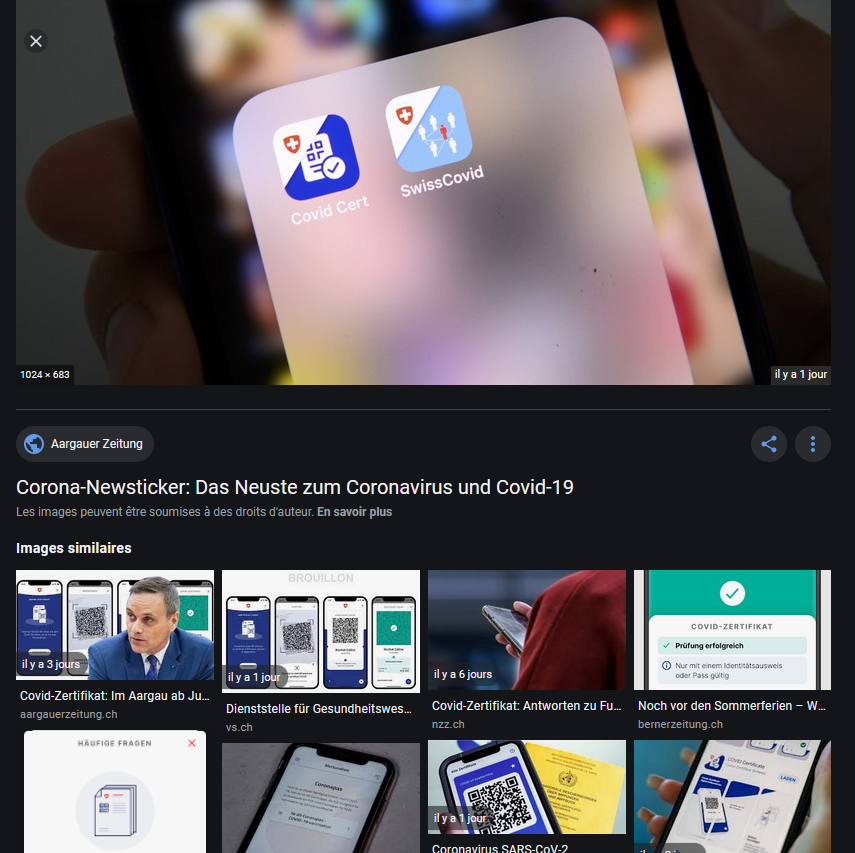
Since the beginning of the COVID crisis, this is not the first time that things have happened in this way, even though the mandate concerned is linked to a sensitive project. In May 2020, for example, the company Ubique was awarded the mandate to develop the SwissCovid tracking application for CHF 1.8 million in the context of such a procedure. The same company that has just been awarded the mandate to develop the COVID certificate application for 1.3 million francs. Two other technical mandates for CHF 1.6 million each were awarded to the companies Health Info Net (HIN) and ti&m. The communication mandate (“Public Relations Services”) was awarded to the Zurich-based company Creative Intelligence Society at a cost of just over CHF 800,000.
An additional last-minute event occurred on June 9, four days before the vote. While the media were announcing the race to see which canton would be the quickest to issue the first COVID certificates, the public learned that these certificates were “full” certificates intended primarily for travel and that the Confederation was in fact planning also a “light” COVID certificate for domestic use. This version, which is supposed to be available from July 12, 2021, should contain “less data” and only show the name of the holder, his/her date of birth and whether the certificate is valid or not. Why was the public not informed from the outset that the certificate would exist in two versions? Why were the different data disclosure requirements on the EU side not addressed from the outset?
Generally speaking, the communication of the federal administration and the authorities is not up to the level of what the population could legitimately expect with regard to a device involving moreover sensitive data and which, if it is introduced, will have a major impact on their daily life.
Public interest and transparency
It should be remembered that even in the particular situation of the Epidemics Act in which Switzerland currently finds itself, “the measures adopted must be justified by an overriding public interest, respect the principles of proportionality (art. 5 al. 2 Cst.), good faith (art. 5 al. 3 Cst.) and equal treatment (art. 8 Cst.), be in conformity with the Constitution and the law and respect fundamental rights,” as Frédéric Bernard, professor of public law at the University of Geneva, reminded us in his article “Lutte contre le nouveau coronavirus et respect des droits fondamentaux” published in March 2020 in the magazine Sécurité & Droit.
The COVID certificate (in “full” or “light” version) is precisely a measure that does not univocally satisfy these principles. Some may even consider that it violates them. In order to be able to measure the stakes and weigh up the interests at stake, correct, intelligible and well-founded information should be available. Unfortunately, this information is still lacking at all levels of official communication: on the real weight of the epidemic (6 see under “Deaths in connection with COVID-19”, 7, 8, 9) and the impact of measures already in place (10, 11), as well as on the degree of individual and collective protection that can be expected from vaccination (12, 13, 14).
Between withholding information and announcements that present the population with a fait accompli, the communication policy of the authorities and the federal administration appears all the more inadequate if we consider the recent debacle of the mesvaccins.ch platform and the controversies related to the SwissCovid app. But also certain problems recently highlighted in the case of the French equivalent of the COVID certificate, as well as in that of the EU “green passport” with which the Swiss certificate must be compatible.
A game-changing device that splits society in two
The question of how long the COVID certificate will be maintained is crucial, but not clarified either. For the SwissCovid app, the answer from the Federal Office of Public Health was and remains cryptic: “The SwissCovid app has been developed solely to contain the spread of the coronavirus. It will be discontinued as soon as it is no longer required for this purpose”. In June 2021, SwissCovid is still around and no one knows precisely what criteria must be met for it to be considered “no longer required.”
The temporary nature of the COVID certificate may end up being wishful thinking. On May 19, 2021, Johan Rochel, associate member of the Center for Ethics at the University of Zurich and author at the think tank foraus, stressed: “We must avoid at all costs that this certificate becomes a part of our daily life”. Less than a month later, his warning no longer seems to be on the agenda if we consider the desire to perpetuate the use of this certificate that is already emerging. The Liberal Party (PLR) parliamentary group has communicated its intention to file a motion demanding that the use of the infrastructure for the COVID certificate should not be limited to a few months, but become permanent, with a view to the digitization of vaccine data and a “sustainable exploitation” of the investments made by the public authorities. This would mean that the certificate would be extended to all vaccinations: in particular, it would replace the mesvaccins.ch platform, which has proved to be deficient, and would be compatible with the future electronic patient file.
This scenario corresponds precisely to the fear expressed by a majority of researchers who participated on June 10, 2021, to the webinar organized by the medical journal The BMJ: once the infrastructure for a digital technology of this kind has been deployed, it tends to stay in place. Unfortunately, its subsequent uses – potential abuses included – cannot be prevented by technical devices upstream.
Moreover, the consequences of the lack of debate are already apparent. Like the fact that a public service media such as SRF can deliver an analysis entitled “The end of the coronavirus is the beginning of inequalities”, where a parliamentary correspondent takes note of the inequalities that the COVID certificate will bring about as one would take note of the inescapable fallout of an uncontrollable natural phenomenon: “While concerns about the coronavirus are gradually fading for those who have been vaccinated, others must now get used to weekly tests – whether at work, at home or at the doctor’s office. When the COVID certificate is introduced (…), people will have to undergo more and more tests: to get into a concert or a soccer match, they will have to take a new test – whereas those who have been vaccinated or cured will have a COVID certificate valid for at least six months. Until the restrictions are lifted for everyone, vaccine skeptics will have to hang on. Until the era of coronavirus is definitely behind us, there are still one or two inequalities left to endure”.
The grey area between choice and blackmail
Today, many people get vaccinated not because they fear getting sick or because they feel invested with a mission of solidarity for which evidence is still lacking, but because they feel they have no choice if they want to be able to «live normally again». When asked by Le Quotidien Jurassien about the reasons for his resignation as Head of the Cantonal Public Health Service, Nicolas Petrémand, “Mr. COVID” of the Canton of Jura, pointed out the shortcuts and misunderstandings that the current discourse induces: “There is no real reasoning anymore. People are given the impression that they need to be vaccinated to go to discos or to be able to travel freely, or at least that it will be less expensive. This is becoming incoherent and above all without scientific basis. The population is intelligent and will wake up one day, but with what consequences?”
This overview shows that on the eve of the vote on the COVID-19 Act, citizens still have to deal with incomplete information, unmanageable delays, last-minute announcements and a lessened freedom of choice. More than a year of uncertainty and constant regime changes have made it impossible to plan for the near future. Indeed, the hunger for normality and the desire of many citizens to focus on organizing the months ahead are understandable and legitimate. But focusing only on these issues contributes to the impression that only the practical details remain to be worked out and that the time horizon is limited to the summer vacations.
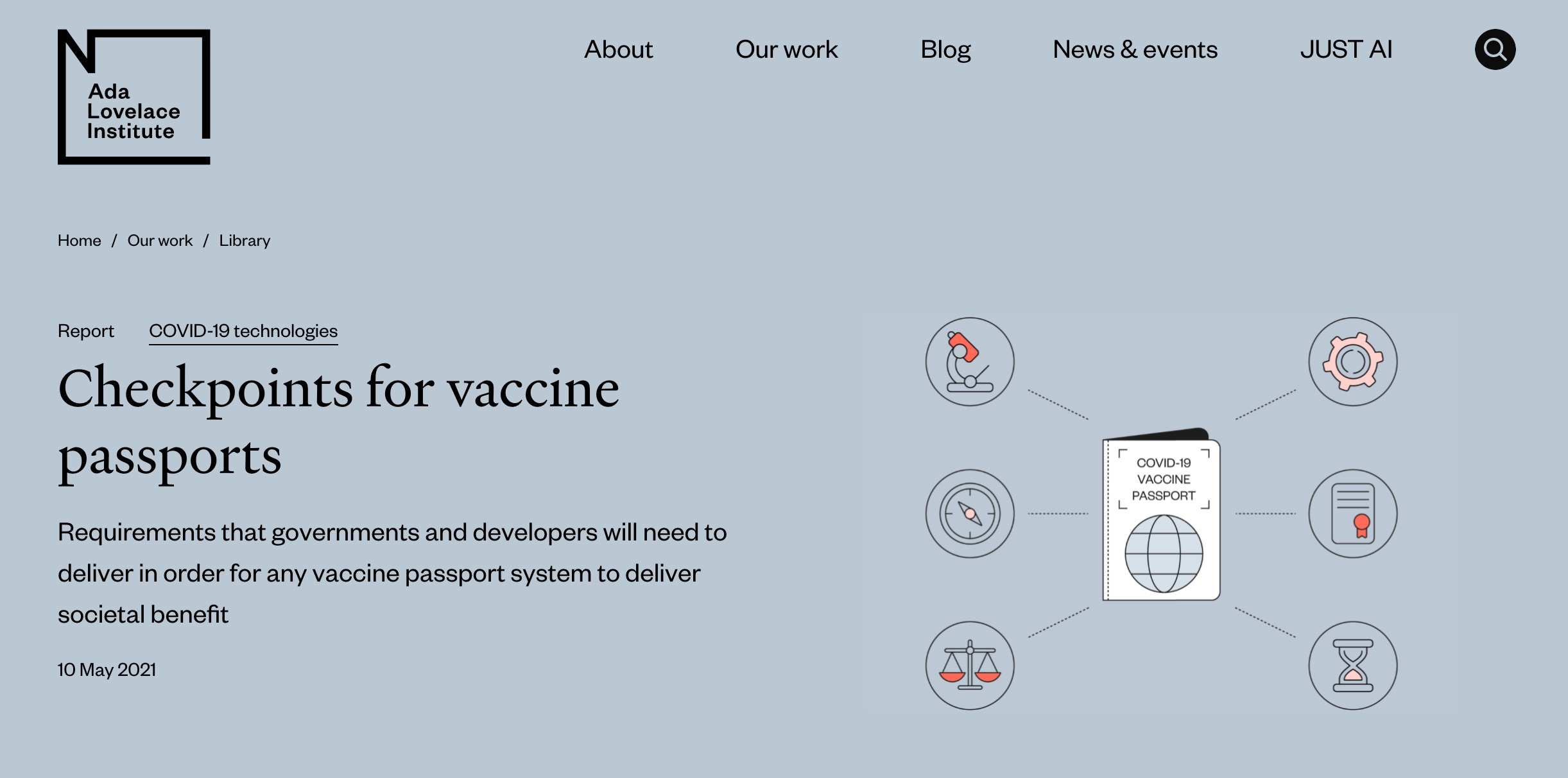
The confusion and spin that have dominated the discussion in recent weeks have oversimplified it. The situation is reminiscent of the scenario the Ada Lovelace Institute’s Checkpoints for vaccine passports study warned against in May 2021: “false choices that impede understanding (e.g., ‘saving lives vs. protecting privacy’)” and “a persuasive and simplistic narrative that these tools can help societies open up more quickly and securely.”
Currently, the information available to the Swiss does not seem to meet any of the six requirements that the authors of this work believe should be met by governments and companies involved in the development of such devices in order to potentially expect a benefit to society:
Scientific confidence in the impact on public health;
Clear, specific and delimited purpose;
Ethical consideration and clear legal guidance about permitted and restricted uses, and mechanisms to support rights and redress and tackle illegal use;
Sociotechnical system design, including operational infrastructure;
Public legitimacy;
Protection against future risks and mitigation strategies for global harms.
Swiss citizens are faced with the choice of whether to agree with the promoters of the referendum that the “blank check” they believe the COVID-19 Act gives the Federal Council should be “torn up” because it allows it to continue to exercise powers it does not normally have. Or, if they agree with the majority of the Parliament, that the Federal Council should continue to have the same “room for maneuver” – if necessary, until December 2031, since the validity of the COVID-19 Act for certain articles runs until that date.
Disclaimer: We will continue to post updates to this article. Unfortunately, changes occur almost daily. To stay informed, follow our Twitter account @RecheckHealth.